
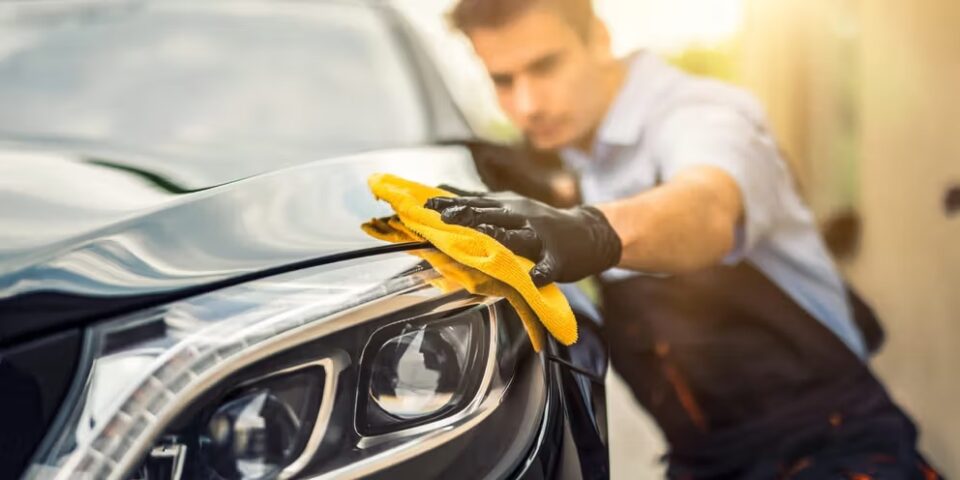
For many individuals, washing their car sounds like an obligation rather than a choice. However, it’s actually the most affordable way to protect your investment, and it can be done by any car owner. In most cases, the amount you invest in a bucket, good soap, and spending a couple of hours on a Saturday will be easily recovered if you decide to sell your vehicle.
The Clear Coat Is Your First Line Of Defence
Minor paint damage on pre-owned vehicles may not be immediately noticeable, but it’s often a build-up of those small everyday occurrences, like a little bird dropping that sat overnight on the hood, the drive-through car wash with its old whirling brushes, that casual no-touch blow-dry technique. Tiny scratches can also be caused by circling dust particles in an old chamois or bath towel.
Conversely, there’s a lot very right with a simple paint maintenance routine. The two-bucket wash reduces grit rubbing against the paint: one bucket with your pH-neutral soap solution, one with clean rinse water. After each swipe of your wash mitt, rinse it in the other bucket. Use a good microfiber towel to dry, not an old chamois or towel. Voila, no more spider-web scratches.
A waxing schedule is even more important; wax is a sacrificial coating over the clear coat of the car, not a repair. Carnauba wax should be applied twice a year, the best-quality synthetic wax perhaps once. Both carnauba and synthetic wax fill microscopic chips in the paint and add a thin protective layer while bringing up the color of the paint. Ceramic coatings, which are synthetic, can last longer than Carnauba wax, up to a couple of years, but must be applied by a professional because it chemically bonds to the paint and will stay fresh while everything else ages around it. Its hydrophobic nature forces droplets to the edges where they slide off and eliminates those etchings.
How Condition Translates To Actual Dollars
Cars lose value regardless of whether you maintain them or not. Maintenance helps reduce that rate of depreciation. The average vehicle, states AAA, will lose 15% to 20% of its value in the first year. The average difference between a car in “Excellent” condition and “Fair” at trade-in is a 10-15% premium – which on a mid-range car is potentially thousands of dollars.
When you are about to sell, determine what similar vehicles are actually selling for in your area. Using carsales can provide a realistic benchmark – what sort of condition are they in, how are they presented, and where does yours compare against them honestly? This exercise will often determine whether the $330 investment in a professional detail before you even advertise it is worth it. It usually is.
Interior Degradation Is Slower But Just As Damaging
UV damage typically isn’t noticeable until you see the damage. The cabin upholstery fades, the plastic on the dash and door panels warps, and the leather on the seats cracks – and not because it’s been heavily used and abused, but because nobody’s ever used a simple UV protectant on easy-to-reach surfaces exposed to direct sunlight. Cracking and warping can’t be reversed, either. Left unprotected, plasticizers inside the material will continue to leech out as the cracking damage gets worse.
That bottle of UV protectant you keep in the trunk for touch-ups costs pennies to apply to the dash and door cards. Reapply every few months if the car sits in the sun. It’s a small price to pay in time and money (and elbow grease) to keep the rest of the car in showroom condition. Seriously, treat the upholstery well and it’ll pay you back in resale value. Leather, too, needs regular treatment to prevent drying. A good leather conditioner keeps the hides nice and supple, preventing the breakdown that prompts creasing and small splits at the seams and any flared bolsters.
When it comes to spills, the most important thing is acting quickly. Avoid carpet and seat fabric getting fully soaked through with a steam cleaner or wet extractor that pulls the liquid up and out of the speedy-drying material. Expensive and problematic mould and bad smells are the result of poorly dried spills, which will soak into the cheap underpadding (the same reason you never want to get hair or foam inside a seat soaking wet while cleaning it). Nasty chemicals that smell like they could etch concrete are also best avoided. Spot extract, don’t scrub.
Nobody using a general vacuum will ever get the cabin seal line dust and grime that will inevitably fill up, however. Or the dust and crumbs in gaps around switchgear and consoles. A gentle vacuum attachment and some detailing brushes are your friends between deep cleaning.
The Case For A Car Hygiene Log
A maintenance history demonstrates mechanical care. A maintenance log demonstrates physical care. Save receipts of professional washes, write down the products you’ve applied, and the date. It’s free and communicates to a potential buyer that the car has consistently been treated well, and the cleaning wasn’t done in a rush to sell it.
Mentioning undercarriage washes here is also important. Road dirt and salt build up underneath where nobody sees it – until the rust forms on the rockers or wheel arches. A proper undercarriage rinse every couple of months will help prevent this.
Proper car care isn’t about being perfect. It’s about being consistent – the little things that build up over the years to keep your car at a higher value, and even get your time investment back out of it.
