
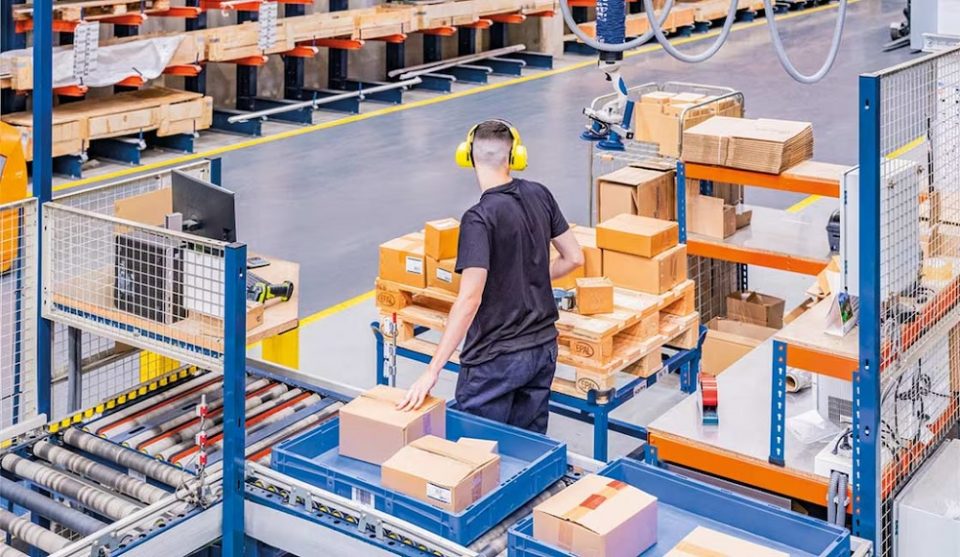
The relentless acceleration of modern commerce has fundamentally altered the expectations placed on distribution centers. Customers now anticipate lightning-fast fulfillment as a baseline standard, treating two-day or even same-day shipping not as a premium perk, but as a given. In this high-pressure environment, warehouse managers often look to sophisticated automation or aggressive labor expansion to meet surging demand. However, throwing more technology or headcount at a fundamentally flawed floor plan is like installing a larger engine in a car with flat tires. The single most impactful lever a facility can pull to dramatically increase throughput is optimizing its physical layout.
When a warehouse floor is laid out strategically, it removes the silent killer of supply chain profitability: unnecessary travel time. By redesigning the physical space to align with human movement and inventory velocity, facilities can drastically accelerate their picking and packing operations without necessarily expanding their footprint or ballooning their payroll.
The Hidden Tax of Unnecessary Travel Time
To understand why layout is so critical, you have to measure where labor hours are actually spent. In a standard, non-automated fulfillment center, travel time can account for up to sixty to seventy percent of a picker’s daily shift. When an employee spends the majority of their day walking between distant aisles, waiting for a forklift to clear a narrow bottleneck, or backtracking across the building to retrieve a single item, they are not picking. They are simply commuting inside the building.
Every extra step taken to fulfill an order acts as a hidden tax on your operational margins. A poorly designed layout forces workers into erratic, overlapping paths that induce fatigue and inevitably lead to costly picking errors. Conversely, an intelligent layout minimizes these physical footprints, converting dead walking time into active, revenue-generating picking time.
Implementing Velocity-Based Inventory Slotting
The foundation of an accelerated warehouse layout is highly strategic inventory slotting. You cannot simply place products on shelves wherever there happens to be an empty space. Inventory must be organized strictly by its movement velocity.
The ABC Analysis Framework
To optimize the floor, warehouses must categorize their stock keeping units (SKUs) using ABC analysis. “A” items are your fastest-moving products, typically making up twenty percent of your inventory but driving eighty percent of your order volume. “B” items are moderate sellers, and “C” items are the slow-moving, rarely ordered goods.
A high-performance layout positions all “A” items immediately adjacent to the packing and shipping zones. By consolidating high-velocity products in a concentrated, easily accessible area, you instantly slash the travel distance for the vast majority of your orders. The slow-moving “C” items should be relegated to the furthest, least accessible corners of the facility, ensuring they do not clog the primary arteries of the warehouse.
Capitalizing on the Golden Zone
Slotting optimization must also account for vertical space. The golden zone refers to the physical shelving space located between a worker’s waist and shoulders. This area requires zero bending, stretching, or step-stools to access. Placing your absolute highest-velocity “A” items within this ergonomic sweet spot dramatically reduces the time it takes to execute a pick while simultaneously reducing physical fatigue and workplace injury rates. Heavy or bulky items should be slotted at ground level, while lightweight, slow-moving items are reserved for the highest racks.
Designing Aisles for Maximum Flow
The configuration of your racking and aisles dictates the physical flow of traffic through the building. Many growing businesses mistakenly squeeze their aisles as tight as physically possible in an attempt to maximize storage density. While this allows for more racks, it chokes the operational flow, causing severe traffic jams during peak fulfillment shifts.
To accelerate operations, aisles must be designed for the specific type of equipment and picking methodologies used in the facility. If your team uses wide picking carts or pallet jacks, the aisles must comfortably accommodate two-way traffic, allowing workers to pass one another without waiting.
Furthermore, a warehouse should not consist of endless, unbroken aisles that stretch from one end of the building to the other. Integrating cross-aisles—horizontal walkways that cut through the main racking structure—allows pickers to easily transition between rows without having to walk all the way to the end of a long aisle. These strategic cut-throughs drastically shorten the travel path for orders that require items from multiple different zones.
Establishing Dedicated Forward Pick and Reserve Storage Areas
Congestion is the enemy of speed. When a picker trying to fulfill a fast e-commerce order has to navigate around a forklift driver who is simultaneously trying to restock a bulk pallet, both operations grind to a halt.
Efficient warehouses solve this collision of duties by physically separating their inventory into a forward pick face and a bulk reserve storage area. The forward pick face is a highly condensed, pedestrian-only zone containing just enough inventory to satisfy a few days of demand. This area is designed strictly for rapid, high-volume order picking, free from heavy machinery. The reserve storage area sits higher up or further back in the warehouse, holding the bulk pallets. Dedicated replenishment teams move inventory from the reserve area to the forward pick face during off-peak hours or night shifts, ensuring the pickers have an uninterrupted, fully stocked environment when the daily fulfillment rush begins.
Streamlining the Packing and Shipping Bottleneck
You can pick an order in record time, but if it sits on a cart waiting for an available packer, that speed is entirely wasted. The layout of the packing and shipping zone is often the ultimate bottleneck in a distribution center.
An optimized packing station is a marvel of ergonomic engineering. The layout must ensure that every single material a packer needs—boxes, poly mailers, void fill, tape, and shipping labels—is within arm’s reach. A packer should never have to take a step away from their workstation to retrieve shipping supplies.
The physical proximity of the packing stations to the shipping docks is equally vital. Finished parcels should flow seamlessly off the packing bench onto a gravity conveyor that feeds directly into the outbound shipping trailers. By arranging the warehouse in a U-shaped flow, where receiving and shipping share the same side of the building but operate out of different doors, facilities can maximize the efficiency of their dock utilization while keeping the internal flow of goods moving in a continuous, logical loop.
Adapting to the Reality of Evolving Inventory
A truly premium warehouse layout is never a finished product; it is a living, breathing framework that must adapt to shifting market realities. The products that fly off the shelves in December might collect dust in July. If a facility locks itself into a rigid layout, its picking speed will naturally degrade as inventory velocity profiles shift with the seasons.
Warehouse managers must schedule routine layout audits, analyzing heat maps of picker activity to identify newly emerging bottlenecks. When a “C” item suddenly goes viral and becomes an “A” item, the layout must be flexible enough to immediately re-slot that inventory closer to the shipping docks.
Accelerating picking and packing operations does not always require millions of dollars in robotic infrastructure. More often, it requires a disciplined, analytical approach to spatial geometry. By eliminating dead travel time, respecting the ergonomics of the human body, separating bulk storage from active picking, and continuously auditing the flow of goods, logistics leaders can transform a chaotic warehouse floor into a high-velocity engine of profitability.
