
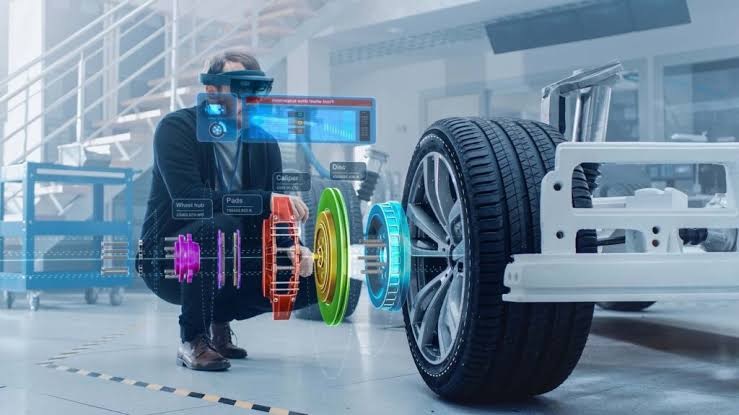
For over a century, the fundamental physics of slowing down an automobile remained completely unchanged. To bring a heavy, fast-moving machine to a halt, automotive engineers relied entirely on the violent application of friction. Traditional braking systems operate by clamping highly abrasive brake pads onto spinning steel or ceramic rotors. This process effectively converts the vehicle’s forward kinetic energy into extreme thermal energy, generating massive amounts of heat that simply dissipate uselessly into the surrounding air. Every time a driver steps on the brake pedal of an internal combustion engine vehicle, they are actively destroying forward momentum and wasting the fuel that was burned to create it.
The transition to electric mobility has fundamentally rewritten this equation. Electric vehicles do not just consume energy; they have the unique ability to harvest it back. Through a brilliant feat of mechanical and electrical engineering known as regenerative braking, the modern electric vehicle transforms the act of decelerating from a highly inefficient waste of energy into an active, on-the-fly charging session. Understanding how this technology operates reveals exactly why electric vehicles possess such a massive efficiency advantage over their gasoline-powered counterparts.
The Dual Nature of the Electric Motor
To grasp how regenerative braking works, you must first understand the core component of an electric vehicle’s powertrain: the electric motor. In a traditional vehicle, the engine is a one-way street; it burns fuel to create rotational force, and that is all it can do. An electric motor, however, is a profoundly symmetrical machine. The exact same hardware that acts as a motor to propel the vehicle forward can seamlessly transition into acting as an electrical generator to slow the vehicle down.
When a driver presses the accelerator pedal, the vehicle’s high-voltage battery sends direct current electricity to the inverter. The inverter translates this into alternating current and feeds it to the electric motor. This creates a powerful rotating magnetic field that forces the internal components of the motor to spin, turning the wheels and launching the car forward.
Flipping the Switch: From Propulsion to Generation
The magic of regenerative braking happens the absolute microsecond the driver lifts their foot off the accelerator. The vehicle’s central computer immediately recognizes that forward propulsion is no longer being requested. In an instant, it reverses the flow of the electrical process. The motor stops pulling electricity from the battery. However, because the vehicle weighs several thousand pounds and is still rolling down the highway, the physical wheels are still spinning.
The forward momentum of the car is now forcing the electric motor to spin. By altering the magnetic fields inside the motor, the computer turns the motor into a generator. As the wheels force this generator to turn, it encounters heavy magnetic resistance. This magnetic drag is incredibly powerful. It fights against the forward momentum of the wheels, acting as an invisible brake that physically slows the vehicle down without a single brake pad ever touching a rotor.
The Conversion and Storage Process
As the motor resists the turning of the wheels, it generates alternating current electricity. This freshly harvested power flows back into the vehicle’s inverter, which converts it back into direct current so it can be accepted by the high-voltage battery pack. The kinetic energy that would have been entirely wasted as heat in a traditional car has been successfully caught, converted, and stored away to be used for future acceleration.
The Transformative Impact on Driving Range
The practical application of this energy recovery system has a profound impact on how an electric vehicle performs in the real world. In a gasoline-powered vehicle, heavy stop-and-go city traffic is the ultimate enemy of fuel economy. The constant cycle of accelerating and braking burns massive amounts of fuel while covering very little actual distance.
For an electric vehicle equipped with robust regenerative braking, stop-and-go traffic is actually the environment where it operates at peak efficiency. Every time the traffic flow stops, the vehicle recovers a significant percentage of the kinetic energy it just spent getting up to speed. While the laws of thermodynamics dictate that no system can capture one hundred percent of expended energy, modern regenerative systems can frequently recover up to seventy percent of the kinetic energy that would otherwise be lost to friction. This continuous cycle of spending and recovering power is why many electric vehicles boast a higher estimated driving range in dense city driving than they do on the open highway, where constant high speeds offer few opportunities to harvest energy.
The Ergonomic Shift of One-Pedal Driving
Beyond the hidden mathematical efficiency, regenerative braking profoundly changes the physical user experience of driving a car. Because the magnetic resistance of the generator is so strong, lifting off the accelerator pedal provides a deceleration force that is often equal to pressing firmly on a traditional brake pedal.
This has birthed the phenomenon of one-pedal driving. In many modern electric vehicles, the driver can adjust the intensity of the regenerative braking through the dashboard touchscreen. When set to its most aggressive level, a driver can navigate an entire daily commute, including coming to a complete stop at traffic lights and stop signs, using only their right foot on a single pedal. Pressing down makes the car go; lifting up makes the car stop.
While this requires a brief period of muscle-memory retraining for drivers transitioning from traditional vehicles, it quickly becomes an incredibly relaxed and fluid way to drive. It heavily reduces the physical fatigue of constantly pivoting the right ankle between two pedals during rush hour traffic, allowing for a much smoother, more controlled deceleration curve.
Preserving Traditional Friction Brakes
It is important to note that electric vehicles still possess traditional hydraulic friction brakes. They are legally required for emergency panic stops and are sometimes necessary to bring the vehicle to an absolute, holding halt on steep inclines. However, because the regenerative braking system handles the vast majority of daily deceleration duties, the physical brake pads and steel rotors are rarely utilized.
This creates a massive secondary benefit for electric vehicle owners: the near-elimination of routine brake maintenance. In a gasoline vehicle, brake pads are a standard consumable item that must be replaced every thirty to fifty thousand miles. In an electric vehicle, the friction brakes are used so infrequently that it is entirely common for the original factory brake pads to last well over one hundred thousand miles before requiring a replacement. Furthermore, this heavy reliance on magnetic braking drastically reduces the emission of brake dust, keeping the vehicle’s wheels remarkably clean and preventing harmful metallic particulate matter from washing into local waterways.
Variables That Limit Regenerative Efficiency
While regenerative braking is a brilliant piece of engineering, it is not immune to the laws of chemistry and physics. There are specific environmental and operational variables that can temporarily limit a vehicle’s ability to harvest energy.
Battery State of Charge
The most common limitation occurs when the vehicle’s high-voltage battery is charged to one hundred percent capacity. Regenerative braking relies on having empty space inside the battery to store the incoming electricity. If the battery is completely full, it simply cannot accept any more voltage without risking severe chemical damage to the lithium-ion cells. Therefore, when an electric vehicle is driven immediately after a full charge, the computer will artificially disable or severely limit the regenerative braking. The driver will notice that lifting off the accelerator does not slow the car down as expected, and they will be forced to rely on the traditional friction brakes until the battery drains a few percentage points.
Extreme Cold Weather
Lithium-ion batteries are highly sensitive to extreme temperatures. When the battery pack is freezing cold, its internal resistance spikes, meaning it cannot safely accept a rapid influx of high-voltage current. On a bitter winter morning, an electric vehicle’s Battery Management System will significantly restrict regenerative braking power to protect the cold cells from permanent degradation. As the vehicle is driven and the battery’s internal thermal management system warms the pack to its optimal operating temperature, the regenerative braking capability will slowly return to its full strength.
Regenerative braking is far more than a clever engineering parlor trick; it is a foundational pillar of modern electric mobility. By refusing to let kinetic energy go to waste, this technology extends driving range, slashes maintenance costs, and fundamentally smooths out the physical act of driving. It represents a paradigm shift where the automobile finally stops fighting the laws of physics and begins actively partnering with them to create a vastly more efficient future on the road.
